29
01
2008
Place mouse over text to view annotation, click on the arrow to play audio.
| 简体 |
繁體 |
Audio |
| 风 |
風 |
[audio:feng1.mp3] |
| 火 |
火 |
[audio:huo3.mp3] |
| 水 |
水 |
[audio:shui3.mp3] |
| 光 |
光 |
[audio:guang1.mp3] |
| 土 |
土 |
[audio:tu3.mp3] |
| 泥土 |
泥土 |
[audio:ni2.mp3,tu3.mp3] |
| 电 |
電 |
[audio:dian4.mp3] |
| 金属 |
金屬 |
[audio:jin1.mp3,shu3.mp3] |
| 塑料 |
塑料 |
[audio:su4.mp3,liao4.mp3] |
| 纸 |
紙 |
[audio:zhi3.mp3] |
[tags] chinese phrases, common chinese phrases, basic Chinese, Chinese voice, mandarin voice, pinyin voice, chinese with voice, annotate chinese, Chinese with audio, pinyin, bopomo, common chinese words, popular chinese words, word list, learn chinese, learn chinese for free, chinese for beginners,Putonghua,chinese words for tourists, chinese phrase for tourists, pronounce Chinese words, pronounce pinyin, pronounce bopomo[/tags]
Comments : No Comments »
Categories : Elements
29
01
2008
Place mouse over text to view annotation, click on the arrow to play audio.
| 简体 |
繁體 |
Audio |
| 衣服 |
衣服 |
[audio:yi1.mp3,fu5.mp3] |
| 夹克 |
夾克 |
[audio:jia1.mp3,ke4.mp3] |
| 内衣裤 |
內衣褲 |
[audio:nei4.mp3,yi1.mp3,ku4.mp3] |
| 外套 |
外套 |
[audio:wai4.mp3,tao4.mp3] |
| 服装 |
服裝 |
[audio:fu2.mp3,zhuang1.mp3] |
| 衬衫 |
襯衫 |
[audio:chen4.mp3,shan1.mp3] |
| 领带 |
領帶 |
[audio:ling3.mp3,dai4.mp3] |
| 长靴 |
長靴 |
[audio:chang2.mp3,xue1.mp3] |
| 鞋子 |
鞋子 |
[audio:xie2.mp3,zi5.mp3] |
| 袜子 |
襪子 |
[audio:wa4.mp3,zi5.mp3] |
[tags] chinese phrases, common chinese phrases, basic Chinese, Chinese voice, mandarin voice, pinyin voice, chinese with voice, annotate chinese, Chinese with audio, pinyin, bopomo, common chinese words, popular chinese words, word list, learn chinese, learn chinese for free, chinese for beginners,Putonghua,chinese words for tourists, chinese phrase for tourists, pronounce Chinese words, pronounce pinyin, pronounce bopomo[/tags]
Comments : No Comments »
Categories : Clothes
29
01
2008
Place mouse over text to view annotation, click on the arrow to play audio.
| 简体 |
繁體 |
Audio |
| 正方形 |
正方形 |
[audio:zheng4.mp3,fang1.mp3,xing2.mp3] |
| 长方形 |
長方形 |
[audio:chang2.mp3,fang1.mp3,xing2.mp3] |
| 三角形 |
三角形 |
[audio:san1.mp3,jiao3.mp3,xing2.mp3] |
| 圆形 |
圓形 |
[audio:yuan2.mp3,xing2.mp3] |
[tags] chinese phrases, common chinese phrases, basic Chinese, Chinese voice, mandarin voice, pinyin voice, chinese with voice, annotate chinese, Chinese with audio, pinyin, bopomo, common chinese words, popular chinese words, word list, learn chinese, learn chinese for free, chinese for beginners,Putonghua,chinese words for tourists, chinese phrase for tourists, pronounce Chinese words, pronounce pinyin, pronounce bopomo[/tags]
Comments : No Comments »
Categories : Shape
29
01
2008
Place mouse over text to view annotation, click on the arrow to play audio.
| 简体 |
繁體 |
Audio |
| 脖子 |
脖子 |
[audio:bo2.mp3,zi5.mp3] |
| 胸 |
胸 |
[audio:xiong1.mp3] |
| 肚子 |
肚子 |
[audio:du4.mp3,zi5.mp3] |
| 手 |
手 |
[audio:shou3.mp3] |
| 手掌 |
手掌 |
[audio:shou3.mp3,zhang3.mp3] |
| 手指 |
手指 |
[audio:shou3.mp3,zhi3.mp3] |
| 脚 |
腳 |
[audio:jiao3.mp3] |
| 脚趾 |
腳趾 |
[audio:jiao3.mp3,zhi3.mp3] |
| 脚踝 |
腳踝 |
[audio:jiao3.mp3,huai2.mp3] |
| 腿 |
腿 |
[audio:tui3.mp3] |
[tags] chinese phrases, common chinese phrases, basic Chinese, Chinese voice, mandarin voice, pinyin voice, chinese with voice, annotate chinese, Chinese with audio, pinyin, bopomo, common chinese words, popular chinese words, word list, learn chinese, learn chinese for free, chinese for beginners,Putonghua,chinese words for tourists, chinese phrase for tourists, pronounce Chinese words, pronounce pinyin, pronounce bopomo[/tags]
Comments : No Comments »
Categories : Body
29
01
2008
Place mouse over text to view annotation, click on the arrow to play audio.
| 简体 |
繁體 |
Audio |
| 头 |
頭 |
[audio:tou2.mp3] |
| 脸 |
臉 |
[audio:lian3.mp3] |
| 眼睛 |
眼睛 |
[audio:yan3.mp3,jing1.mp3] |
| 鼻子 |
鼻子 |
[audio:bi2.mp3,zi5.mp3] |
| 嘴巴 |
嘴巴 |
[audio:zui3.mp3,ba1.mp3] |
| 耳朵 |
耳朵 |
[audio:er3.mp3,duo5.mp3] |
| 眉毛 |
眉毛 |
[audio:mei2.mp3,mao5.mp3] |
| 头发 |
頭髮 |
[audio:tou2.mp3,fa5.mp3] |
[tags] chinese phrases, common chinese phrases, basic Chinese, Chinese voice, mandarin voice, pinyin voice, chinese with voice, annotate chinese, Chinese with audio, pinyin, bopomo, common chinese words, popular chinese words, word list, learn chinese, learn chinese for free, chinese for beginners,Putonghua,chinese words for tourists, chinese phrase for tourists, pronounce Chinese words, pronounce pinyin, pronounce bopomo[/tags]
Comments : No Comments »
Categories : Body
24
01
2008
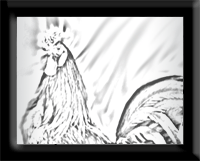
Place mouse over text to view annotation, click on the arrow to play audio.
| 简体 |
繁體 |
Audio |
| 鸡 |
雞 |
[audio:ji1.mp3] |
| 小鸡 |
小雞 |
[audioplayer file=”http://cozychinese.com/audio/xiao3.mp3″,”http://cozychinese.com/audio/ji1.mp3″] |
| 母鸡 |
母雞 |
[audio:mu3.mp3,ji1.mp3] |
| 鸡蛋 |
雞蛋 |
[audio:ji1.mp3,dan4.mp3] |
| 雄鸡 |
雄雞 |
[audio:xiong2.mp3,ji1.mp3] |
| 鸡尾酒 |
雞尾酒 |
[audio:ji1.mp3,wei3.mp3,jiu3.mp3] |
Comments : No Comments »
Categories : Animals
17
01
2008
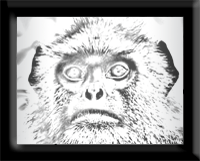
Place mouse over text to view annotation, click on the arrow to play audio.
| 简体 |
繁體 |
Audio |
| 猴 |
猴 |
[audio:hou2.mp3] |
| 猴子 |
猴子 |
[audio:hou2.mp3,zi5.mp3] |
| 猕猴桃 |
獼猴桃 |
[audio:mi2.mp3,hou2.mp3,tao2.mp3] |
Comments : No Comments »
Categories : Animals
15
01
2008
Place mouse over text to view annotation, click on the arrow to play audio.
| 简体 |
繁體 |
Audio |
| 蔬菜 |
蔬菜 |
[audio:shu1.mp3,cai4.mp3] |
| 菜蔬 |
菜蔬 |
[audio:cai4.mp3,shu1.mp3] |
| 生菜 |
生菜 |
[audio:sheng1.mp3,cai4.mp3] |
| 芥兰 |
芥蘭 |
[audio:jie4.mp3,lan2.mp3] |
| 甘蓝菜 |
甘藍菜 |
[audio:gan1.mp3,lan2.mp3,cai4.mp3] |
| 红萝卜 |
紅蘿蔔 |
[audio:hong2.mp3,luo2.mp3,bo2.mp3] |
| 马铃薯 |
馬鈴薯 |
[audio:ma3.mp3,ling2.mp3,shu3.mp3] |
| 洋芋 |
洋芋 |
[audio:yang2.mp3,yu4.mp3] |
| 红薯 |
紅薯 |
[audio:hong2.mp3,shu3.mp3] |
keyword:chinese phrases, common chinese phrases, basic Chinese, Chinese voice, mandarin voice, pinyin voice, chinese with voice, annotate chinese, Chinese with audio, pinyin, bopomo, common chinese words, popular chinese words, word list, learn chinese, learn chinese for free, chinese for beginners,Putonghua,chinese words for tourists, chinese phrase for tourists, pronounce Chinese words, pronounce pinyin, pronounce bopomo
Comments : No Comments »
Categories : Food & Cooking
15
01
2008
Place mouse over text to view annotation, click on the arrow to play audio.
| 简体 |
繁體 |
Audio |
| 水果 |
水果 |
[audio:shui3.mp3,guo3.mp3] |
| 苹果 |
蘋果 |
[audio:ping2.mp3,guo3.mp3] |
| 苹果汁 |
蘋果汁 |
[audio:ping2.mp3,guo3.mp3,zhi1.mp3] |
| 柳橙 |
柳橙 |
[audio:liu3.mp3,cheng2.mp3] |
| 桔子水 |
桔子水 |
[audio:ju2.mp3,zi5.mp3,shui3.mp3] |
| 葡萄 |
葡萄 |
[audio:pu2.mp3,tao5.mp3] |
| 梨子 |
梨子 |
[audio:li2.mp3,zi5.mp3] |
| 芒果 |
芒果 |
[audio:mang2.mp3,guo3.mp3] |
| 菠萝 |
菠蘿 |
[audio:bo1.mp3,luo2.mp3] |
| 凤梨 |
鳳梨 |
[audio:feng4.mp3,li2.mp3] |
| 草莓 |
草莓 |
[audio:cao3.mp3,mei2.mp3] |
| 李子 |
李子 |
[audio:li3.mp3,zi5.mp3] |
| 杏 |
杏 |
[audio:xing4.mp3] |
keywords:chinese phrases, common chinese phrases, basic Chinese, Chinese voice, mandarin voice, pinyin voice, chinese with voice, annotate chinese, Chinese with audio, pinyin, bopomo, common chinese words, popular chinese words, word list, learn chinese, learn chinese for free, chinese for beginners,Putonghua,chinese words for tourists, chinese phrase for tourists, pronounce Chinese words, pronounce pinyin, pronounce bopomo
Comments : 1 Comment »
Categories : Food & Cooking